
Travel has become easier than ever because people can find information, compare options, and plan trips online. Many travelers now use digital platforms to discover destinations, organize travel ideas, and make better choices. Tatavel is a keyword that can be explored in this growing travel and tourism space.
Whether you are planning a short weekend trip or a longer holiday, having useful travel information can make the experience smoother. This article explains the idea behind Tatavel, how travelers can use travel platforms, and what to consider before planning a journey.
What Is Tatavel?
Tatavel can be viewed as a travel-focused term connected with exploring destinations, finding travel information, and organizing trips. Modern travelers often look for platforms that make planning simple and convenient.
A good travel platform should help users discover places, understand available options, and prepare for their journey. Instead of searching through many unrelated websites, travelers prefer having useful information in one place.
The travel industry continues to change as more people use smartphones and online services. Because of this, digital travel resources have become an important part of trip planning.
Why Online Travel Platforms Are Popular
Online travel platforms save time and make research easier. Travelers can explore destinations before making important decisions.
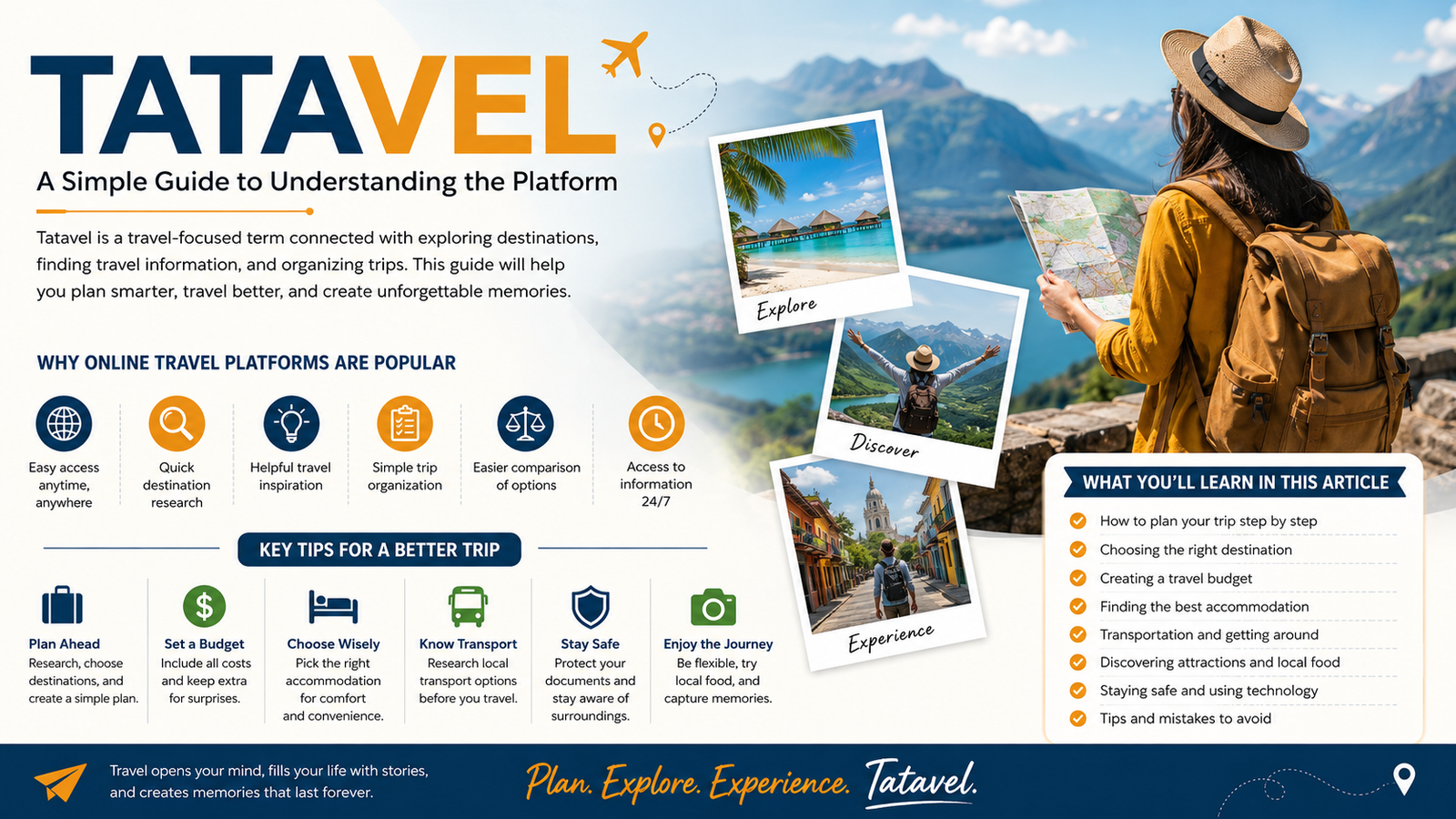
There are several reasons people prefer digital travel resources:
- Easy access from smartphones and computers
- Quick destination research
- Helpful travel inspiration
- Simple trip organization
- Access to travel information at any time
- Easier comparison of different options
Travelers can research a destination while sitting at home. They can also continue planning while traveling.
Planning a Trip With Tatavel
Successful travel usually starts with good planning. Before booking anything, travelers should understand where they want to go and what they want to experience.
Start by choosing a destination. Think about the purpose of your trip. Some people enjoy beaches, while others prefer mountains, historical locations, or busy cities.
Next, consider your travel dates. Prices and availability can change depending on the season. Popular destinations may become expensive during holidays and peak travel periods.
Creating a simple travel plan can also prevent unnecessary stress. Write down important places you want to visit and estimate how much time each activity may require.
Choosing the Right Destination
Choosing a destination depends on personal interests, budget, available time, and travel goals.
A city vacation may be suitable for someone interested in restaurants, shopping, museums, and entertainment. A mountain destination may be better for travelers who enjoy hiking and nature.
Weather should also be considered. Researching seasonal conditions can help travelers choose comfortable travel dates.
Local culture is another important factor. Learning basic information about local customs can make communication easier and help visitors behave respectfully.
Creating a Travel Budget
A travel budget helps prevent unexpected financial problems. Travelers should consider more than transportation and accommodation.
A basic travel budget may include:
- Transportation
- Accommodation
- Food and drinks
- Local transportation
- Attractions
- Shopping
- Travel insurance
- Emergency expenses
It is useful to keep some extra money available for unexpected situations. Flights may be delayed, transportation costs can change, and travelers may discover activities they did not originally plan to try.
Finding Suitable Accommodation
Accommodation can strongly affect the overall travel experience. Travelers should consider location, price, facilities, and reviews before making a decision.
A hotel near major attractions may cost more but can reduce transportation expenses. A property farther from the center may be cheaper but require additional travel time.
Important factors to check include room facilities, cancellation policies, check-in times, and guest feedback.
Travelers should also avoid making decisions based only on attractive photographs. Reading several recent reviews can provide a more balanced understanding of a property.
Transportation and Getting Around
Transportation is another major part of trip planning. Depending on the destination, travelers may use airplanes, trains, buses, taxis, rental cars, or local transport systems.
Before traveling, research how people normally move around the destination. Public transportation may be affordable in large cities, while renting a car may be more convenient in rural areas.
Airport transportation should also be planned in advance. Knowing how to reach your accommodation after arriving can make the first day much easier.
Discovering Local Attractions
One of the best parts of travel is discovering interesting attractions. Every destination has something different to offer.
Historical sites can teach visitors about local culture and important events. Museums provide opportunities to explore art, science, and history. Natural attractions offer beautiful landscapes and outdoor activities.
Travelers should avoid trying to visit too many attractions in one day. A relaxed schedule often creates a better experience than rushing from one location to another.
Experiencing Local Food
Food is an important part of travel. Trying local dishes can introduce visitors to the culture and traditions of a destination.
Travelers can research popular local meals before arriving. Local restaurants, markets, and food streets may provide experiences that are different from international chains.
However, visitors should consider dietary needs and food safety. When possible, choose clean and well-reviewed places, especially when trying unfamiliar foods.
Staying Safe While Traveling
Safety should always be part of travel planning. Travelers should research basic safety information before visiting an unfamiliar destination.
Keep important documents secure and avoid carrying large amounts of cash. Important digital copies of passports, tickets, and reservations can also be useful.
Travelers should remain aware of their surroundings, especially in crowded tourist areas. Following local laws and respecting local customs can also prevent unnecessary problems.
Travel insurance may provide additional protection against certain unexpected events. The exact coverage depends on the policy, so travelers should read the terms carefully.
Using Technology During Travel
Smartphones have changed the way people travel. A single device can provide maps, translation tools, booking information, communication, and entertainment.
Travelers can download important information before leaving home. Offline maps can be particularly useful when internet access is limited.
It is also smart to keep chargers and power banks available during long travel days. Losing phone power can make navigation and communication difficult.
Tips for a Better Travel Experience
A few simple habits can make travel more enjoyable.
First, avoid overpacking. Carrying fewer items makes transportation easier and reduces stress.
Second, keep important documents organized. Store passports, identification, reservations, and tickets in a secure location.
Third, remain flexible. Travel plans sometimes change because of weather, delays, or unexpected circumstances.
Finally, take time to enjoy the destination. Travel is not only about checking places off a list. It is also about experiencing new environments and creating memorable moments.
Common Mistakes Travelers Should Avoid
Even experienced travelers can make mistakes. One common mistake is creating an unrealistic itinerary. Trying to do too much can turn a relaxing vacation into a stressful schedule.
Another mistake is ignoring the total cost of a trip. Small expenses can quickly add up.
Travelers should also avoid relying on a single source of information. Comparing different sources can help identify outdated or incorrect details.
Failing to check entry requirements is another serious mistake when traveling internationally. Passport validity, visas, health requirements, and other rules should be checked before departure.
Frequently Asked Questions About Tatavel
What is Tatavel?
Tatavel is a travel-related keyword that can be associated with online travel research, destination discovery, and trip planning.
Why is travel planning important?
Planning helps travelers manage their time, budget, transportation, accommodation, and activities more effectively.
How can I create a travel budget?
List expected costs for transportation, accommodation, food, activities, and emergencies. Then keep an additional amount for unexpected expenses.
What should I consider when choosing accommodation?
Consider location, price, facilities, cancellation policies, and recent guest reviews.
How can I stay safe while traveling?
Research the destination, protect important documents, remain aware of your surroundings, and follow local laws and customs.
Should I plan every part of my trip?
Not necessarily. A basic itinerary is helpful, but leaving some free time allows you to explore spontaneously.
Conclusion
Tatavel represents an opportunity to explore the broader world of modern travel planning and digital travel resources. With the right information, travelers can make smarter decisions about destinations, accommodation, transportation, activities, and budgets.
Good preparation does not mean planning every minute. Instead, it means understanding the important details before leaving home. Research your destination, create a realistic budget, choose suitable accommodation, and stay flexible when plans change.
Most importantly, remember that travel is about more than reaching a destination. It is about discovering new places, experiencing different cultures, meeting people, enjoying local food, and creating lasting memories. A thoughtful approach to travel planning can make every journey more comfortable, enjoyable, and rewarding.